
Let's be real for a second: buying a home is probably the biggest purchase you'll ever make. And in today's NJ and PA markets? The stakes feel even higher. Whether you're eyeing a cozy spot in Trenton, a family home in Hamilton, or crossing the river into Philadelphia, the last thing you want is to shell out $30,000 more than you needed to because you didn't know how to spot an overpriced listing.
I get it. The market moves fast, emotions run high, and suddenly you're tempted to throw in an offer just to "get it over with." But here's the thing: you don't have to guess. You don't have to rely on gut feelings or hope your agent is steering you right.
With a few quick market analysis hacks, you can confidently determine whether a property is worth the asking price or if you should keep scrolling. Let me walk you through seven strategies I use every day to help my clients avoid overpaying. These are practical, actionable, and honestly? Pretty easy once you know what to look for.
Hack #1: Run Your Own Comparative Market Analysis (CMA)
This is the bread and butter of smart home buying. A Comparative Market Analysis looks at recent sales of similar properties in the same area to figure out what a home is actually worth: not what the seller wishes it was worth.
Here's how to do a quick version yourself:
- Find 3-5 homes that sold in the last 90 days within a half-mile radius
- Make sure they're similar in size, bedrooms, bathrooms, and condition
- Note the price per square foot for each
- Average those numbers out
If the home you're looking at is priced significantly higher than that average without any clear reason (major upgrades, bigger lot, better location), that's a red flag. The seller might be testing the waters with an inflated price.

Hack #2: Use the Rent-to-Value Ratio (Even If You're Not an Investor)
This one sounds fancy, but it's actually super simple. The rent-to-value ratio compares what a property could rent for versus its purchase price. A healthy benchmark is at least 0.6% monthly rent relative to the purchase price.
Why does this matter if you're just buying a home to live in? Because it tells you whether the price makes economic sense for the area. If a $400,000 home could only rent for $1,500/month (that's 0.375%), something's off. Either rents are unusually low, or the home is overpriced compared to what the market actually supports.
This quick calculation takes two minutes and can save you from a costly mistake.
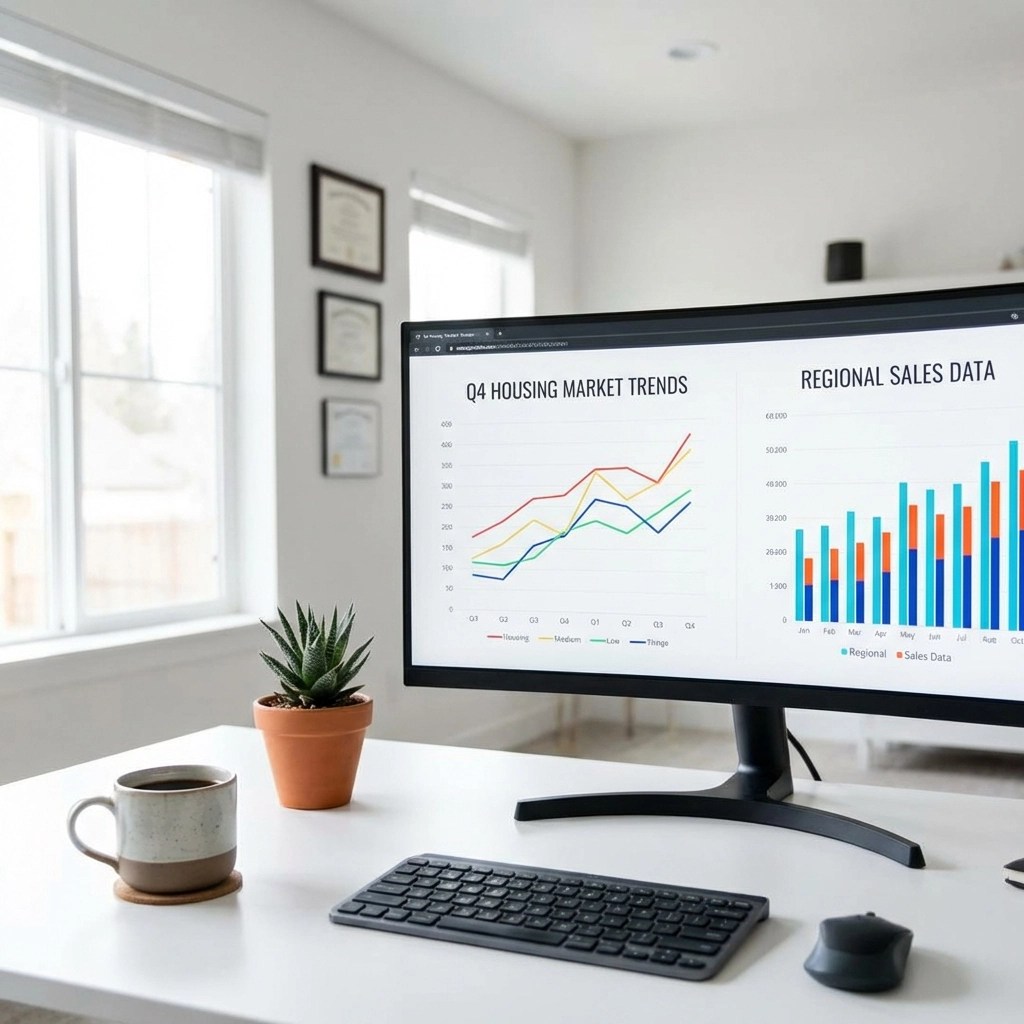
Hack #3: Dig Into 5-10 Years of Pricing Trends
Markets don't lie: but sometimes sellers do (unintentionally, of course). By looking at historical pricing data for a neighborhood over the past 5-10 years, you can spot patterns that reveal the truth.
What you're looking for:
- Steady, gradual appreciation = healthy market
- Sudden spikes = potential bubble or one-time event (new development, infrastructure project)
- Plateaus or dips = possible oversaturation or economic issues
If a neighborhood's prices jumped 25% in one year but the surrounding areas only went up 5%, ask yourself why. Sometimes there's a good reason. Sometimes there isn't. Either way, you want to know before you buy.
Free tools like Zillow Research let you download data at the ZIP code level, making this research pretty painless.
Hack #4: Evaluate the Local Economic Fundamentals
Here's something most buyers skip entirely: and it can make or break your investment.
Before you fall in love with a property, take a hard look at the local economy:
- Job growth: Are employers moving in or out?
- Population trends: Is the area growing or shrinking?
- Industry diversity: Is the town dependent on one major employer?
In places like Trenton and parts of Mercer County, we're seeing some encouraging signs with healthcare, education, and state government providing stable employment bases. But every neighborhood is different. A town that relies on a single factory or employer is riskier: if that employer leaves, property values can tank.
Strong economic fundamentals support long-term value. Weak fundamentals can leave you underwater on your mortgage faster than you'd think.
Hack #5: Use Heatmaps and Visualization Tools
Sometimes you need to see the data, not just read it. That's where visualization tools come in clutch.
Platforms like Mashvisor and even Zillow's heat maps let you see at a glance:
- Which neighborhoods have the highest rental demand
- Where occupancy rates are strongest
- How prices vary block by block
This is especially useful in markets like Philadelphia or the Jersey suburbs where one street can be drastically different from the next. You might find that the "overpriced" home is actually in a micro-neighborhood that commands premium prices: or you might discover the seller is way out of touch with reality.
Either way, visual tools help you make sense of the numbers quickly.

Hack #6: Watch for Seasonal and Anomalous Price Movements
Real estate has seasons, just like everything else. Spring and summer typically see higher prices because more buyers are competing. Fall and winter often bring more motivated sellers willing to negotiate.
But beyond normal seasonal swings, watch for anomalies:
- A new transit line or highway exit can temporarily inflate prices
- A major employer announcing layoffs can deflate them
- Even a viral TikTok about a "hidden gem" neighborhood can skew prices
The key is distinguishing between sustainable value increases and temporary spikes. If prices jumped because a new Amazon warehouse opened nearby, that might stick. If they jumped because of a one-time media frenzy? Probably not.
Hack #7: Understand the True Cost of Local Conditions
This is where my background as a public insurance adjuster really comes into play. The sticker price is just the beginning.
Before you commit, investigate:
- Property taxes: New Jersey has some of the highest in the nation. A $350,000 home with $12,000/year in taxes is a very different financial picture than one with $8,000/year.
- Insurance costs: Flood zones, older construction, and certain neighborhoods can dramatically increase your premiums.
- Local regulations: Landlord-tenant laws, HOA restrictions, and zoning rules all affect your flexibility and costs.
I've seen buyers get excited about a "deal" only to realize the property taxes alone added $400/month to their expected budget. Always factor in the full picture.
The Bottom Line: Knowledge Is Your Superpower
Look, I know this stuff can feel overwhelming. You're already stressed about finding the right home, getting approved for a mortgage, coordinating inspections, and a hundred other things. The last thing you want is more homework.
But here's what I've learned after years in real estate and construction: the buyers who do a little extra research are the ones who sleep well at night. They're not wondering if they overpaid. They're not kicking themselves two years later when the appraisal comes in low.
They bought smart. And you can too.
If you're looking for a home in the Trenton, Hamilton, or greater Philadelphia area and want someone in your corner who actually knows how to analyze these markets, I'd love to chat. Together, we can find you a property that's worth every dollar: and not a penny more.
Ready to start your search the smart way? Visit my website to connect and let's talk about your goals.

Leave a Reply