
Well, that was quite a storm we just got through, wasn't it?
If you're reading this from Hamilton or Trenton today (January 26, 2026), you're probably still digging out from the heavy snowfall that blanketed our area. First things first: I hope you and your family stayed safe and warm.
Now that the worst has passed, it's time to talk about what happens next. And here's the thing: some of the most serious damage from a snowstorm like this one isn't immediately obvious. It hides. It lurks. And if you don't catch it early, it can turn into a much bigger (and more expensive) problem down the road.
My name is Joseph B. Clarke, and before I became a real estate agent with Go Ramsie Homes Powered by eXp, I spent years working in construction and currently serve as a public insurance adjuster. I've seen firsthand what storms can do to homes: and more importantly, what homeowners miss when they do their post-storm walkthrough.
So grab a cup of coffee, and let me walk you through the seven hidden dangers you need to check for right now.
1. Ice Dams Forming on Your Roof Edge
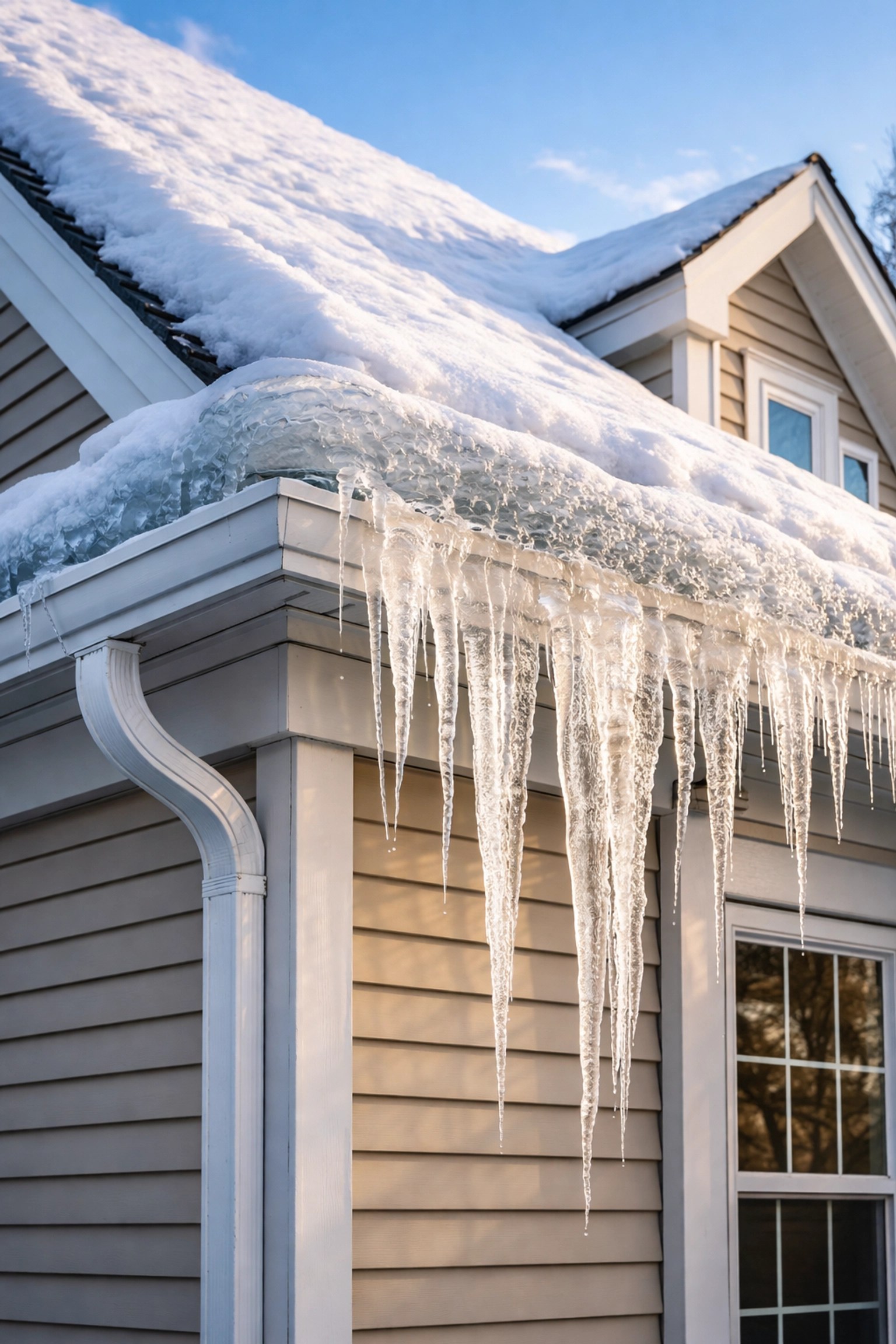
Let's start at the top, literally. Ice dams are one of the sneakiest threats to your home after heavy snowfall, and they're extremely common in our older Hamilton and Trenton neighborhoods.
What's happening: When heat escapes from your attic, it melts the snow on your roof. That water runs down toward the edge, where it's colder, and refreezes. Over time, this creates a "dam" of ice that traps water behind it. That trapped water has nowhere to go but under your shingles and into your home.
What to look for:
- Icicles hanging from your roof edge (a warning sign, not just a pretty winter scene)
- Ice buildup along the gutters
- Water stains appearing on your ceiling near exterior walls
What to do: If you spot ice dams forming, resist the urge to climb up there with a hammer. Instead, use a roof rake from the ground to carefully remove snow from the first few feet of your roof. For serious ice dam issues, call a professional.
2. Heavy Snow Load on Older Roofs
Here's something most people don't think about: snow is heavy. Really heavy. A cubic foot of packed snow can weigh anywhere from 15 to 30 pounds. Multiply that across your entire roof, and you're looking at thousands of pounds of extra weight sitting up there.
Why this matters in Hamilton and Trenton: Many of our homes were built decades ago. Those older roofs weren't necessarily designed to handle the kind of heavy, wet snow we just experienced. I've seen roofs sag, and in extreme cases, collapse.
Warning signs to watch for:
- Doors that suddenly won't close properly
- Cracks appearing in drywall or plaster (especially around door frames)
- Creaking or popping sounds from the ceiling
- Visible sagging in the roofline when viewed from outside
If you notice any of these, take it seriously. Get everyone out of that area of the house and call a professional to assess the structural integrity.
3. Frozen Pipes (and the Signs They're About to Burst)
This is the one that keeps me up at night during storms like this. Frozen pipes don't just inconvenience you: when they burst, they can cause catastrophic water damage in a matter of hours.
High-risk areas in your home:
- Pipes running through unheated spaces (garage, crawlspace, attic)
- Pipes along exterior walls
- Outdoor hose bibs and sprinkler lines
Early warning signs:
- Reduced water pressure or no water flow from faucets
- Frost visible on exposed pipes
- Strange smells coming from drains (blocked ice can trap odors)
My advice: If you suspect a pipe is frozen but hasn't burst yet, you might be able to thaw it safely using a hair dryer or space heater. Never use an open flame. And if a pipe does burst? Shut off your main water supply immediately and call a plumber.

4. Foundation Drainage Issues
Here's where my construction background really comes into play. When all this snow melts: and it will: that water has to go somewhere. If your property's drainage isn't directing water away from your foundation, you could be looking at basement flooding, foundation cracks, or worse.
What to check:
- Are your downspouts directing water at least 4-6 feet away from your foundation?
- Is the ground around your home sloping away from the house, or toward it?
- Do you see any pooling water near your foundation as the snow starts to melt?
Pro tip: Walk the perimeter of your home in the next few days as temperatures rise. Take note of where water is collecting. This information is gold: both for fixing current issues and for when you're ready to sell or buy a new home. Speaking of which, if you're thinking about buying in the Hamilton or Trenton area, reach out to me and I can help you spot these drainage red flags before you sign on the dotted line.
5. Gutter and Downspout Damage
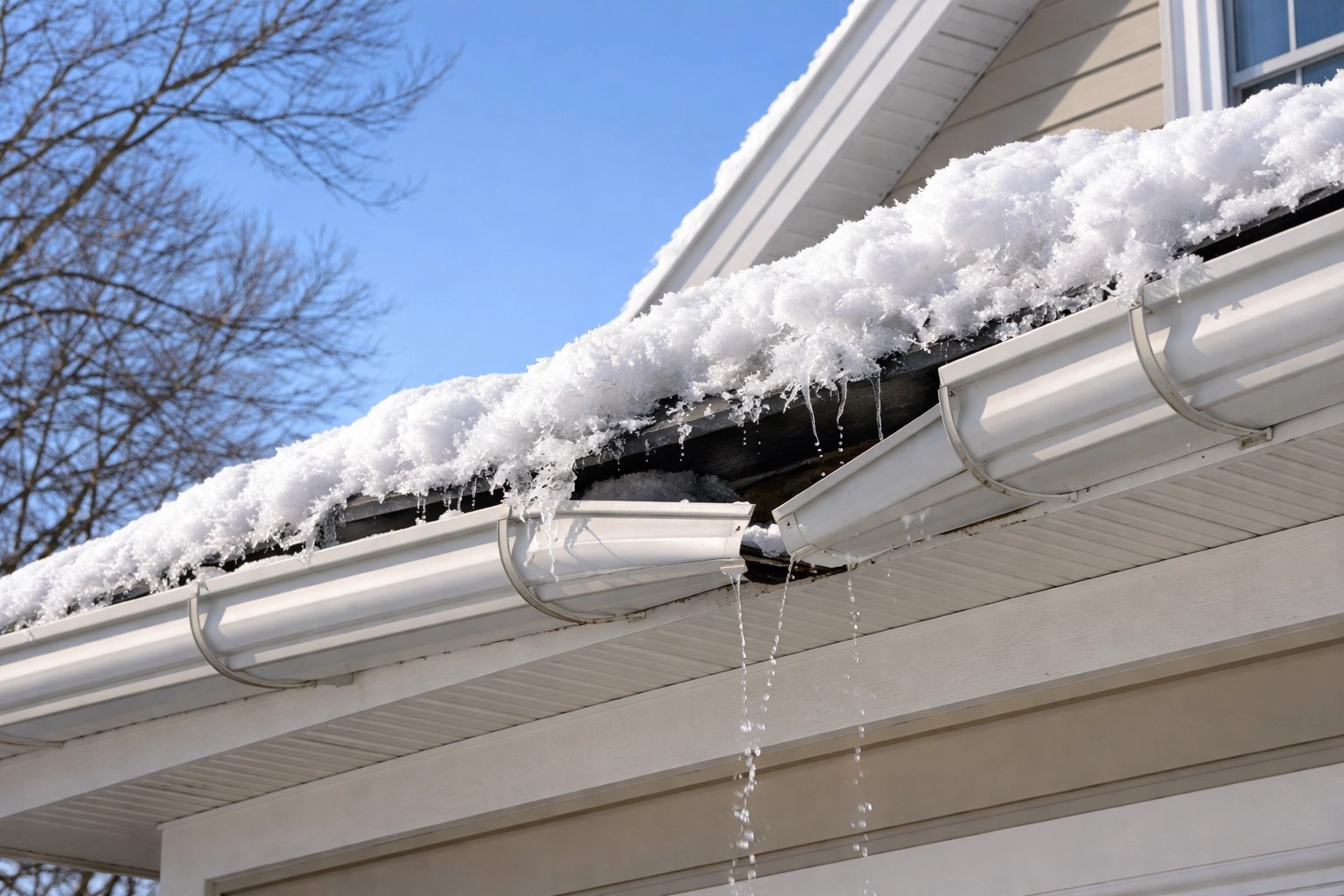
Your gutters took a beating this week. Between the weight of the snow, potential ice buildup, and debris, they may not be functioning the way they should.
What to inspect:
- Gutters pulling away from the roofline
- Sagging sections where snow accumulated
- Cracks, holes, or separated joints
- Downspouts that are crushed, disconnected, or pointing in the wrong direction
When gutters fail, water backs up under your shingles, overflows onto your siding, and pools around your foundation. It's a chain reaction of damage that's completely preventable with a quick inspection.
6. Hidden Water Intrusion Points
Water is persistent. It finds every gap, crack, and weakness in your home's exterior. After a storm like this, you need to play detective.
Key areas to inspect:
- Seals and caulking around windows and doors
- Flashing around chimneys, vents, and skylights
- Any area where different building materials meet
Inside your home, look for:
- Water stains on ceilings, walls, or floors (even small discolorations)
- Peeling paint or bubbling wallpaper
- Musty odors (a sign that moisture is already causing mold growth)
Here's the thing about water damage: it often develops inside your walls where you can't see it. That's why I always tell homeowners: if something looks even slightly off, investigate further. The cost of a professional inspection is nothing compared to the cost of mold remediation or structural repairs.
7. Electrical Hazards You Can't See
This is the danger that scares me most, because it's invisible until it's too late.
Before you do anything else, check for:
- Outlets that no longer work
- Flickering lights or circuits that keep tripping
- Any burning smell near your electrical panel
- Exposed wiring anywhere in your home
If water got into your electrical system: through the roof, walls, or basement: you could be dealing with a serious fire or shock hazard. Don't take chances here. If anything seems off, call an electrician before using those circuits.
Document Everything (Your Insurance Will Thank You)
As a public insurance adjuster, I can't stress this enough: take photos and videos of everything. Before you touch anything, before you start repairs, document the damage from safe areas.
- Photograph visible damage from multiple angles
- Video any ongoing issues (dripping water, sagging structures)
- Save every receipt for emergency repairs
- Write down dates and times of when you discovered damage
Insurance companies typically reimburse reasonable temporary measures to prevent further damage. But you need documentation to support your claim.
When In Doubt, Reach Out
Look, I know this list might feel overwhelming. But here's the good news: you don't have to figure this out alone.
Whether you're a current homeowner dealing with storm damage, or you're in the market to buy and want someone who can spot these issues before they become your problem, I'm here to help. My years in construction and insurance work weren't just a job: they were preparation for moments like this.
Together, we can make sure your home stays safe, your investment stays protected, and you don't get blindsided by hidden damage.
Stay warm out there, Hamilton and Trenton. And if you have questions or need guidance, don't hesitate to get in touch.
: Joseph B. Clarke
Real Estate Agent & Public Insurance Adjuster
Go Ramsie Homes Powered by eXp

Leave a Reply